Harmonious living is the highest and most difficult of Arts

It is possible that we gradually learn the Art of harmonious living through our mistakes, if we are taught by them. In this long, and often painful, learning process, cultivating virtues in our character is a must, while applying common sense in every situation always helps. This ultimate ART is our mission!

Wednesday, February 4, 2009

The Wages of Greek "Democracy"

In the beginning of May 1989, upon my return from London, where I had stayed for three months for personal and family purposes, I found my country unusually burning with political fervor. Campaigning for the most critical parliamentary elections was well under way. Greece almost resembled a vast political “coffee house” where young and old, learned and ignorant, were passionately engaged in aggressive debates on the most recent revelations and allegations of corruption in high places, including some accusations against Prime Minister Andreas Papandreou himself.

In the face of the unprecedented political and financial scandals, in which the Socialist government of PASOK (“Pan-Hellenic Socialist Movement”) was mired, the word “Catharsis,” had become a slogan in the mouths of disappointed Greek people and, indeed, of the campaigners of every political party. Even Andreas Papandreou himself, famous for his charm and his populist sensibility, had to endorse the necessity of “Catharsis.” If re-elected, he promised to carry out a thorough investigation into the alleged scandals and punish those involved, no matter how high an office they had held in his government.

The whole atmosphere was full of a sense of anticipation for a cleansing of the political system of its scandals, corruption, and decay. Nearly all columnists in the daily newspapers wrote fiery articles about the need for the return of principles and values to Greece’s political and public life. In a way, most, if not all of them, had assumed the role of heralds of righteousness. One had the impression that Greece was about to turn over a new page, i.e. to turn her back on a rotten past, to swallow the bitterness caused by the promised “change” (allaghi) which never came, and make a new beginning under an honest leadership.

Personally, it didn’t take me long to enter the climate of “Catharsis” and be enthusiastic about it. What was going on around me, what I heard from radio programs, what I witnessed in the streets and watched on television was in tune with what I had in my heart ever since I had returned permanently to Greece in November 1984, i.e. the need for a national regeneration. Great hope arose in my heart that, perhaps, the time for this had arrived and that, surely, I myself had a role to play in my country’s moral revival.

Without wasting any time, I started collecting information on the alleged scandals in order to organize my archives for what I knew was going to be one of my next books. I also collected all the speeches of Andreas Papandreou and of his chief rival, Constantine Mitsotakis, the then leader of the conservative opposition party (New Democracy), as well as their interviews in the dailies. I nearly cracked up because for this work. I was reading almost all the daily newspapers, underlining the important parts, and forming separate files on each subject. Luckily, I didn’t have to buy all those newspapers. For more than a year – nearly all the critical period I am talking about – someone else bought the papers for me. I only had to read them a day later. I had never met this man, but the kind lady, who was selling newspapers in her kiosk, took the initiative in asking her customer not to throw away the papers at the end of the day because someone else needed them! So, every day I collected the previous day’s papers from the kiosk. I did this faithfully for over a year, and I was so grateful to that lady and the unknown friend. You see, under my financial circumstances, I could not afford to pay daily for newspapers so much money. But as the saying goes, “Where there's a Will, there's a way”!

Little could I have suspected at that time that the “Catharsis” everyone promised, and for the sake of which the nation was almost driven to the verge of another civil war, would end up in a fiasco. I could have never imagined that the hypocrisy and ambiguousness of the politicians would prove stronger than the Greek majority’s demand for “Catharsis” of governmental corruption. Greece had arrived at a crossroads and was called by Fate to make a critical choice. What a pity, how tragic, she chose the wrong turn! She preferred compromise and covering up of corruption. This gave the green light to more corruption, more decay, more shoulder-shrugging cynicism, and more disillusionment. Now, what President Constantine Karamanlis had said several months earlier, that the state of the country was as that of “a vast madhouse”, was confirmed beyond any doubt.

In this short story I shall not refer in detail to that dark, in my opinion, period of Greece’s modern history, for which I have already written a book (in Greek). Rather, I shall only mention a few things, just to enable the reader to form his own opinion on those events. What cast the darkest cloud over the Papandreou government was the so-called “Koskotas Scandal.” According to Constantine Mitsotakis, that was the biggest financial and political scandal Greece had ever known. How tragic for my country that worse than these scandals would follow later…

The “Koskotas Scandal” had been gathering force since mid-October, 1988, when a special commissioner was appointed to conduct an audit at the Bank of Crete, a bank controlled by Koskotas. By the end of November, the commissioner had found that at least $209 million dollars was missing from the Bank of Crete! The matter had, literally, stirred up a storm around Prime Minister Andreas Papandreou and his government. All over our country Greeks now wondered how this mysterious Koskotas, only thirty-four years old, had managed in six years to build an economic empire and a press conglomerate (Grammi) comprising three daily newspapers, five magazines, and a radio station. The indisputable fact that all Grammi’s magazines and newspapers served the interests of the Papandreou government raised suspicions among rival publishers who had been worrying about Koskotas’ aggressive penetration into the publishing industry.

Where did Koskotas – only a junior officer at the Bank of Crete since 1979 – find the money to found “Grammi” back in 1982 and create one of the world’s most advanced printing plants? And where did he raise the money from to buy the Bank of Crete in 1984? Further, by whose order from autumn 1985 – only a few months after Papandreou’s re-election on the 2nd of June – did state-managed corporations start transferring large bank deposits from the big national banks into the Bank of Crete, then the smallest private bank in the country? Still, by whose urging did Koskotas buy the popular Greek football team Olympiakos, spending four billion drachmas, a sum far exceeding his bank’s legally available working capital? Last, but not least, by whose help did Koskotas manage to flee Greece in November 1988, despite the round-the-clock discreet surveillance by 40 secret service agents?

All the above questions, and many more, demanded clear and convincing answers. Publishing rivals called for a reckoning while all Greeks demanded a thorough investigation into “The Scandal of the Century.” In the meantime, George Koskotas was locked in an American prison in Salem, Massachusetts, and was fighting extradition to Greece on charges of forgery and embezzlement. From there he threatened that he held enough secrets “to fry” the entire Socialist government of Andreas Papandreou. Was Koskotas telling the truth?

This, briefly, was the notorious “Koskotas Scandal” which alarmed respected authors, academicians, and intellectuals in Greece. Unfortunately, it wasn’t the only scandal that surfaced during that period. Charges of bribery and corruption against government officials were abounding. Succumbing to the pressure of the public demand for “Catharsis”, several parliamentary investigating committees were formed to check through testimonies regarding the alleged scandals.

Under the circumstances, and as I was longing for the spiritual renewal of my country, I probably overestimated the role which I, as a writer, could play in the Greek political scene. For the rest of the year I did nothing else apart from collecting and absorbing information on the vulgarization of Greek society. At times, I felt as if I had been stooping down over a huge, uncovered cesspool, stirring it up and inhaling its sickening odor. Yet, I was grimly determined to follow closely what Prime Minister Andreas Papandreou called “the nightmare”. I had decided to fully experience, along with all my fellow Greeks, the national drama awaiting “Catharsis” – “Catharsis” in which I also had a role to play through my books. I used to believe this at that time with all my heart.

In the June 18th, 1989, parliamentary election returns, Papandreou’s socialist PASOK party lost its majority in Parliament. However, in spite of all scandals and the alleged charges of embezzlement, kickbacks, and bribery against his government, Papandreou collected quite a high percentage of votes (39.1%) and secured 125 seats in the 300-member Greek Parliament. No one was more surprised by this outcome than Papandreou himself. It was surely more than he could have expected. To have 39% of the voters by your side, when nearly all the media are against you, is not a small thing. A well-known and respected columnist commented that the people who voted for the “PASOK of scandals” must be crazy... Crazy or not, it was apparent that at least 39% of the voters voted against “Catharsis.”

Thanks to the new electoral law that strengthened the potential showing of the second party in Parliament – a law passed in March 1989, and tailor-made to suit the needs and to boost Papandreou’s weakened PASOK – Mitsotakis’ New Democracy party, which collected 44.37% of the votes, secured only 145 seats, i.e. it fell six seats short of an absolute majority of 151 seats. Mitsotakis, then, although he was the winner, couldn’t form a pure New Democracy party government. Thus, intense negotiating started in order to form a ruling coalition with the “Alliance of the Left.” It was absolutely crucial that this Parliament would form a government, if there were to be any real political cleansing. Greek law placed a time limit of only one parliamentary term, no matter how short, as the span within which to prosecute cabinet ministers for crimes committed in the previous term.

In order for a ruling coalition to be formed, intensive bargaining started among the parties, while the role of “kingmaker” had now fallen to the “Alliance of the Left” for the first time in Greek history! The Alliance, dominated by Harilaos Florakis’ Communist Party, had won a total of 28 seats at the polls. First, C. Mitsotakis, the leader of the New Democracy party, was given the mandate by the then-President of Greek Democracy, Christos Sartzetakis, to form a coalition. According to Greek law, he had three days in which to try. Under the circumstances, his only option for collaboration was with the “Alliance of the Left.” But, Harilaos Florakis was reluctant to share power with Mitsotakis. Instead, the Alliance released a statement calling for an “ecumenical government,” formed by “commonly acceptable personalities” that would begin the process of “Catharsis” and lead the country to new elections. Mitsotakis did not accept that idea and, so, the mandate went to Andreas Papandreou. He, too, was unable to form a ruling coalition, as both parties, the right and the left, had made it clear that there would be “no collaboration with the leadership of PASOK.”

The Greek drama was dragging on too long. At least it seemed so to those, like myself, who longed for “Catharsis” and agonized over the future of their country. By now, all Greek affairs, domestic and foreign, were put on hold. To use a popular expression of that period, everything was “frozen.” The whole country was at a standstill, or, rather, brought into a muddled condition. Meanwhile, the Greek media continued bringing to light more scandals from the previous government, including some deceitful deeds against the European Community, kickbacks from arms purchases, and the planting of illegal wiretaps.

When the mandate was given to Harilaos Florakis, the eyes of all Greeks turned to him. Was he serious about “Catharsis?” Could he find a solution to deliver Greece from this drama? Whatever decision he would make, it would be historical in any case. Of course, it wouldn’t be a personal decision, but the Alliance’s. It was now up to the “Alliance of the Left” to put together a coalition to end the stalemate that followed the June 18th elections. Thanks to Mitsotakis’ brave decision to drop his insistence on being appointed Prime Minister in a new government, the way towards the solution of this Greek drama opened, literally, at the last minute. At that, Harilaos Florakis, the leader of the Communist Party, then seventy-five years old, announced that his Alliance would support a three-month interim government under conservative leadership, but with the widest possible participation. Prime Minister of this transitional government would be Tzannis Tzannetakis, a retired naval officer and long-time Member of Parliament.

What a relief! As I heard this news I cried for joy. I was so happy that when I met a communist, an old man in our building, I spontaneously embraced him. I was surprised to realize that he was just as enthusiastic about this solution as I was. He, too, had a burden for “Catharsis” and although he hated conservatives – he had been in exile for several years because of them – he didn’t mind communists collaborating temporarily with the Right for he knew there was no other way to lead the country into political cleansing.

The new coalition government was called “monster-bred” (“teratogenesis”) and “government of non-governing” (“kyvernisi akyvernisias”) by Andreas Papandreou. On the other hand, C. Mitsotakis called the Communists’ decision to support the conservatives a “historic compromise.” However, H. Florakis never stopped publicly expressing his demurral over this, repeating that it was “only a temporary solution with very specific goals.” Indeed, the main aim of this transitional government was to carry out national “Catharsis”, specifically the investigation and punishment of senior officials in the previous Papandreou government, who allegedly were involved in financial scandals. Now, Tzannis Tzannetakis, Greece’s new Prime Minister whom Andreas Papandreou called “straw man” (“ahyranthropos”), promised that he would proceed swiftly to the already planned investigations into fraud and corruption under the preceding administration of Andreas Papandreou, but without vengefulness.

During that period, Papandreou’s PASOK didn’t remain idle. It launched a nasty war of obstruction against the new government. Most outgoing ministers refused to brief their successors, while it was reported that their offices had been stripped of important files and documents. Worse still, the pro-PASOK daily “Avriani” along with its “Radio Athens 99.2” were undermining our very national unity. Avriani’s radio station had launched a systematic, malicious propaganda campaign against the conservatives, scratching old wounds, and stirring up passions of hatred, which had been buried in the nation’s collective subconscious since the end of the bloody civil war, some fifty years before. Songs of warfare talking about bloodshed, knives and swords, were pulled out of the “ossuary” of the darkest period of Greek history by Avriani’s radio station. These songs were played over and over again, always followed by Papandreou’s most popular slogan: “The people don’t forget what the Right means.” “The Right” in the Papandreou era, by the way, was, more or less, a synonym for fascism.

It was as if some secret dark agents were fomenting national chaos. I was terrified. I often feared the worst. I resorted to praying earnestly for peace in our country, but not at the cost of “Catharsis.” For me, “Catharsis” was important for the very survival of our nation. I don’t know how many of my fellow Greeks felt the same way, or how many feared another civil war over “Catharsis,” but I honestly did. Was I oversensitive, perhaps even naive? Or, did I have some inner information so that I could intercede in prayer for my country more effectively? Only God knows...

While the “Catharsis”-seeking lawmakers were preparing to establish parliamentary committees – one for each scandalous affair – for examining the alleged involvement of Papandreou and members of his cabinet in scandals, Papandreou, himself, newly-released from a hospital where he had been treated for pneumonia, was getting ready to marry the princess of his heart, former air hostess, Dimitra Liani. The couple was married on the 13th of July 1989, and for Greece, this was “the marriage of the century.”

I was only now beginning to marvel at the determination and tremendous inner strength of Andreas Papandreou. This was the man who, less than a year before (September 30, 1988) and at the age of 69, had undergone triple bypass cardiac surgery and who, for a short while, seemed to have lost nearly everything: his health, his family’s and countrymen’s respect, and his government’s credibility. Now, though, with Dimitra always by his side, he appeared to be flexing his political muscles again, dynamically confronting the fiercest accusations from the media and political opponents any Greek politician had ever faced. And, thanks to his gift of spellbinding oratory, he managed to keep his party together throughout the most critical for PASOK period.

Because of the long, heated parliamentary debates on the alleged scandals of Papandreou’s previous administration, the gulf between socialists and conservatives widened. Suddenly, though, as the Greek people were watching the live acrimonious debate through the state-managed television channels, there was a gesture of national reconciliation that surprised most Greeks. The coalition government of Tzannis Tzannetakis, in an attempt to wipe out the long-standing sense of division and mistrust between the left and the right, performed an important symbolic action. It decided to burn about 100 tons of security files, collected since 1944, on hundreds of thousands of Greek citizens who were considered to be a threat to the state. The files concerned communists and had been compiled by conservative (right) as well as socialist (center) governments. This was an effort to immolate a painful past and purge old and bitter memories from the 4-1/2 year civil war that ended in August 1949.

I was shocked to hear that more than 16.5 million files were burned in the furnace of a steel mill in Eleusina, a few miles outside of Athens! Watching the darkest part of Greek history going up in flames on television, while the Greek Parliament was voting for “Catharsis,” filled my heart with hope for my country’s regeneration and a new beginning towards a healthier future for our nation. Alas, my enthusiasm was short-lived. On the 26th of September 1989, only a few hours before the Parliament debated the fate of Andreas Papandreou on Koskotas’ scandal, national “reconciliation” was dipped in blood. A prominent new lawmaker, Pavlos Bakoyannis, was shot dead by the notorious “November 17th” terrorist organization outside his office in Kolonaki. Who was Pavlos Bakoyannis? None other than the son-in-law and close adviser of New Democracy leader, Constantine Mitsotakis, husband of the current Minister for Foreign Affairs of Greece, Mrs. Dora Bakoyannis. The whole nation was shocked and everyone expected that the heated debate in Parliament would, at least, be postponed. It went on as scheduled, though, with roses decorating Bakoyannis’ empty seat in Parliament...

On September 28th, at three o’clock in the morning, after two days of vigorous debates in which Papandreou defended himself dynamically, the 300-member Parliament decreed with 166 “yes” votes to refer the former Prime Minister to a special Court. This court would be composed of 12 judges drawn from the high Courts of the country and would be headed by the President of the Supreme Court. Along with Andreas Papandreou, four of his former cabinet ministers would be tried, all facing charges of gross malfeasance in connection with the Koskotas scandal. A week earlier (September 20th), at midnight, Parliament had agreed by 169 “yes” votes that Papandreou should also be prosecuted for allegedly ordering illegal wiretaps on the phones of prominent politicians – friends as well as foes. Papandreou was absent during those parliamentary debates because of “too much respect for Parliament, the highest institution of democracy”! This is what he said in his letter to Parliament.

Within a week, the coalition government of “Catharsis,” having completed its role, dissolved Parliament and called new elections for November 5th, 1989. The Socialist campaign theme would now be the government’s “penalization of political life,” the “debasing of democracy,” the “biased handling of the alleged scandals,” and the question: “In the future, what will stop a parliamentary majority from indicting the minority with criminal charges with each change of government?” These were now Papandreou’s new arguments against “Catharsis”. On the top of it, he had already set in motion the most wondrous live laundry: the “laundry” of people! It was the people, i.e. the PASOK voters, who were now called to carry the burden of Papandreou’s defense. And they did carry it, quite effectively, while their idol kept declaring in high tones and in every instance, “No mud touches me.” Apparently, in Papandreou’s opinion, Parliament based its decision to refer him to a special Court upon “mud,” upon “despicable allegations,” and as part of an “unprecedented political conspiracy” aimed at destroying him as well as Greek democracy! And his faithful followers believed him.

This kind of campaigning proved quite effective for PASOK as it increased its percentage in the November 5th election returns! PASOK took 40.7% of the votes and 128 seats, i.e. three more seats than before. New Democracy increased its percentage, too. It received 46.2% and 148 seats, but it still fell three seats short of an absolute majority! The loser was now the “Alliance of the Left” which lost seven seats. It was “punished” for collaborating with the right to send Papandreou to court. Once again, the electoral law produced no government. For this, no one was more furious than C. Mitsotakis. It appeared that his life-long goal of becoming Prime Minister was out of his reach. How ironic and frustrating for him to know that under the previous electoral law, which was in force during the 1985 elections, PASOK had secured 161 seats with only 45.82% of the votes!

New negotiations and bargaining started, new coming-and-going of party leaders to President Christos Sartzetakis, and the Greek drama continued with all national affairs being “frozen.” I was beginning to be sick and tired of all this. I had seen the same “play” before. “Who is going to deliver us from this stalemate?” I wondered. The only thing that had now become obvious was that any viable government should include PASOK in it. No one could ignore the will of 40.7% of the Greek people. The accusers had to collaborate with the accused! It seemed absurd, but there was no other way...

On the 21st of November, a new-old “Messiah” was sworn in as Prime Minister of an “ecumenical” government. He was Xenophon Zolotas, eighty-five years old, a professor of economics and former governor of the Bank of Greece for many decades. He was considered to be a wise man and many hoped that, with his knowledge and vast experience, he would manage to face the chaotic economic situation of Greece effectively. Unfortunately, it wasn’t to be. From its inception, the “ecumenical” government was systematically undermined by New Democracy’s leader, C. Mitsotakis, who couldn’t wait to become Prime Minister. He kept stating publicly that this “discordant” alliance of conservatives, socialists and communists was unable to govern, because the three partners couldn’t agree on any important policies, nor could they find solutions to pressing economic problems. The funny or rather tragic thing was that Mitsotakis started grumbling about the government of “national unity and national necessity” only three days after he had agreed to support it! He demanded that new elections should be held, at the latest by April 1990. This meant that the Greek people would be drawn to elections for the third time in nine months!

For me, all this was frustrating, ridiculous, absurd, and even treacherous. I couldn’t wait to put pen to paper to denounce all the political machinations that had brought our country to political, economic, and moral chaos. To immediately start a book about all this was premature, though, as I had to wait for “Catharsis” to be completed in the special Court. This would take another two years, but it was important for me to speak now. I felt that I ought to get actively involved in what was going on in my country. Ideally, I would like to have a column in one of the daily papers and pour out my soul. I firmly believed that I not only had a calling in writing but, moreover, I had a practical and rational thinking and that my opinion would be interesting and useful. So, I started writing political articles, sending them to various newspapers together with an application for employment. However, I had no success. Once again, what I already knew had been verified: in Greece, it doesn’t matter what you know and what you can do, but whom you know. And, unfortunately, I had no acquaintances in high Media places.

Eventually, I resorted to “Physe” (“Nature”), a bi-weekly ecological paper published by the “Union of Ecologists.” Its publishers and editors – two partners – were thrilled with my fiery articles. They published them without any censorship, although, I must admit, quite often my language was strong and sharp against vile politicians. I wasn’t getting paid for these articles, but the publishers agreed that at the end of the year, they would compile all my articles into a book and publish it for me. I was more than happy with this deal and made sure that I tackled all the political, social, and religious issues that burdened me the most. I wrote articles about the real ecology – which should start from our own selves – about education, anarchy, populism, union strikes, terrorism, the predicament of communism, the vulgarization of the Media, what the characteristics of a good politician should be, the Orthodox Church, and more. I also wrote “open” letters to Constantine Mitsotakis and Andreas Papandreou, the protagonists of social and political chaos during that period. I was happy with what I was doing and, although I was aware that “Physe” did not have a particularly large circulation, I believed that I was fulfilling my mission to Greece.

In the election returns of April 8th, 1990, the New Democracy Party took 46.88% of the votes and 150 parliamentary seats, still one seat short of an absolute majority! This time, however, C. Mitsotakis was luckier than before. Theodoros Katsikis, the only deputy of DIANA – a party then headed by the later President of the Hellenic Republic, C. Stephanopoulos, who had lost his seat – was willing to support Mitsotakis’ government. He even joined the New Democracy Party soon after the government won a vote of confidence in the Greek Parliament on the 26th of April 1990. This left DIANA without any representatives in Parliament.

With the fragile majority of one, C. Mitsotakis was now called to implement “Catharsis,” to strengthen the shattered Greek economy, and to reform the “hydrocephalic” and incompetent public sector – difficult tasks, indeed, for a Prime Minister who was walking on a tightrope. Regarding foreign policy, for those who are able to read between the lines it might be interesting to know that the very first political decision of Mitsotakis’ government was to recognize, de jure, the State of Israel, something that Andreas Papandreou had stubbornly refused to do during his previous eight-year tenure as Prime Minister.

It is worth mentioning here that, during the first three months of 1990, I often contemplated getting actively involved in politics and putting myself forward as a candidate for the elections of the 8th of April. The thing that eventually stopped me from doing this was that I couldn’t find a political party in which I felt at home, or a party leader who was worthy of my trust and respect. One way or another, they had all disappointed me and it was obvious that they put their personal and party interests above the interests of our country and the Greek people. My eyes were now fully opened to the degeneracy of politics and the corruption of politicians. I had no illusions, though, that the Greek ruling class would allow an independent voice like mine to be heard.

In the meantime, the so-called “Catharsis” of the Greek political life had gotten well under way. The first major trial was completed on August 11, 1990, and it concerned the “Yugoslavian Corn.” The Special Court found the former Deputy Minister of Finance, Mr. “N.A.”, guilty of fraud and forgery and sentenced him and five of his colleagues to 3-1/2 years of imprisonment. The hilarious, albeit tragic, thing was that the imprisoned “N.A.” was proclaimed a “martyr of democracy” by many PASOK followers on the grounds that, although he had confessed that his crime was collective, he had added, “I am not going to become a nightmare and I shall not betray my colleagues.”

None was more upset by the imprisonment of his ex-cabinet minister than Andreas Papandreou himself. His turn might now be approaching. However, he didn’t shrink back. A. Papandreou was a fighter and a survivor. During his eight years in office as Prime Minister, he had managed to gain control of most trade unions and he now used them to undermine the government of C. Mitsotakis. Throughout September 1990, nearly all Greek workers of both public and private sectors were on strike. The whole country was paralyzed. The situation was chaotic. How utterly tragic this was! Such was the picture of a nation at the time it was demanding to be the host of the “1996 Golden Olympiad!”

On the eve of the 17th of September, only a few hours before the I.O.C. members’ decision about the city to host the Golden Olympiad, Andreas Papandreou addressed a huge rally of PASOK supporters in Aigaleo, the most populous working class district of Athens. And what did he call for? New elections! As the mesmerized crowd shouted, “Down with the Junta of Mitsotakis!” (A democratically elected government only six months’ old), Andreas Papandreou called his followers to shout even louder so that their message could be heard in Tokyo! And, sure enough, the message about the Greek chaos was heard in Tokyo, not only by Prime Minister Mitsotakis himself and the numerous (226) Greek Olympic committee delegations, but also by the I.O.C. members who, quite rightly, gave the Golden Olympiad to Atlanta instead of Athens! Unfortunately, many prominent Greeks, among who was the late Melina Mercouri, instead of blaming ourselves for the result, blamed... “Coca Cola” and our hidden “enemies” who... “envy the glory of our history”!

It is this old syndrome of grandeur in the collective Greek subconscious that often blinds Greeks to our poor contemporary performance. And it is exactly my attempt to highlight our shortcomings through my books and articles that rendered me unpopular among my fellow Greeks...

Monday, January 21, 2008

A Tragicomic Story of Instant “Salvation”


The following incident took place in 1985, soon after my return to Greece from England, where I had lived and worked for 10 years. In the beginning I had made some connections with the Greek Evangelical community, albeit with an investigative and skeptical spirit. The story I shall relate here is true, and this experience was a determining factor for my openly denouncing the Evangelical doctrine of instant salvation by faith.

One day, in the beginning of January 1985, I had a phone-call from Manos, a Greek-American missionary, and a member of the so-called “Four Square Gospel” Pentecostal church in Athens. He asked me if I could go with him to the island of Kefalonia to “minister” to a few people there. He said that he had visited that island during the summer of 1984, distributing evangelistic leaflets published by the “Christian Literature Crusade”, and that several people who read them were interested and had invited him to go back and answer their questions. “Kefalonia? Yes, I would very much like to go there!” I answered. Visiting that “high place” of idolatry, and finding out more about the 400-year-old embalmed mummy of St. Gerasimos that is worshipped there, was among my top priorities. I thanked Manos for his invitation and, as his car wasn’t in a working order, we arranged to travel there by my car. We would drive to Patras and then take the ferry to the island. Nikos, a young and enthusiastic “born again” Christian, would extend hospitality to us in his house in Argostoli, the capital of Kefalonia, and from there we would make daily excursions to the villages, in order to meet the people who had responded to the Christian Literature Crusade’s leaflets.

We left for Kefalonia on Tuesday morning, January 22, 1985. It was a sunny and mild winter’s day and we both enjoyed the trip while sharing the driving. During the journey, I asked Manos to explain to me how he would “evangelize” the people waiting for him. I wanted to know if there was any common ground on this and if I could take part in his mission. Seeing that we totally disagreed on fundamental Christian issues, I concluded that I shouldn’t get involved at all. I would simply accompany him around the villages, watching, listening, but not saying a word. I just did not like to have any meaningless quarrels with him. After all, it was he who had been invited to talk to people and not I.

We spent the first day after our arrival in Argostoli meeting a few “born again” Christians there, and Manos exchanged some ideas with them about the ways the island of Kefalonia could be “won to Christ.” The following day, we visited the village from which Manos had received the larger number of letters. We were welcomed into the beautiful house of Kostas, an ex seaman. Several people had been gathered there, mostly relatives, but also some neighbors, looking forward to listening to the important missionary from Athens. The people were friendly and hospitable and, as soon as we arrived, the housewife started preparing for lunch. Having decided not to take part in the “evangelization” of the people there, and since I wanted to avoid any embarrassment, I offered to help the hostess in the kitchen. She didn’t accept my offer, though, so I stayed in the living room and took a notebook from my handbag in order to take some notes. I didn’t want to sit there idly. Manos was in a hurry to get on with the job and couldn’t wait to get the people “saved.”

The conversation went on like this:
-“Well, here we are! Do you want to be sure that you go to heaven after you die?”
-“Hmmm...well...but no one knows. You can never be sure,”
said the sensible seaman on behalf of everyone else.
-“Oh, yes! You can certainly be sure. We have no doubt that we will go to heaven; we are saved! Do you also want to be saved?”
-“Well, yes, but I mean, how?”
-“Easy! It’s all written here!”
-“What is there?”
-“It’s the Word of God! You know, the Bible.”
-“Oh, really? I’ve heard of it. What does it say?”
-“Let me show you. Here we are, read, ‘If you confess with your mouth Jesus is Lord and believe in your heart that God raised him from the dead, you will be saved.’ (Romans 10:9).”
-“Yeah, but we always believed that Jesus was risen from the dead. We are Christian Orthodox, aren’t you?”
-“Of course we are. We teach the Bible the Orthodox way. But we came here to let you know that you are not saved yet, although you believe in Christ’s crucifixion and resurrection. You see, you have not been ‘born again’ yet.”
-“Born again? I’ve never heard of this before. What’s all this ‘born again’ business about?”
-“I am glad you asked! That’s what we are here for, to explain all this to you. You see, salvation is by faith; it is a gift from God. You don’t have to do anything in order to earn it. This is what it says in Ephesians 2: 8-9. Your problem is that you have been trying to earn it by good works. ”
-“Problem? Do you mean that I don’t need to do any good works in order to be saved?”
-“Exactly! This is what God’s Word says. That’s why God died for you.”
-“We know that Jesus (not God) died on the cross,” protested several of them.
-“This is what I meant,”
said Manos.
-“It sounds good! Yeah, we do want to be ‘born again’ and be sure that we are saved from now on and we shall go to heaven. Show us, then. How?”
-“All right, good! Now, repeat this prayer out loud after me, please.”

Then, Manos started praying the “prayer of salvation” and the people repeated it after him, as they were instucted to do. It was the same conventional prayer heard at the end of every evangelistic preaching all over the world. Throughout this time I kept taking notes on everything that was said, while keeping my sunglasses on to hide the occasional tears in my eyes. Why tears? Was I moved that so many people were instantly “saved”? Of course I wasn’t. I was grieved, however, by the fact that Evangelical Christianity had been deceived into believing that salvation was such an easy game... When the obedient villagers had finished repeating the dictated prayer, Manos said to them triumphantly, “That’s it. You are saved now! Write down the time, 11:15 a.m., and the date, 25th of January, 1985. It is a historical day for you all! Today you have been born again! You are going to heaven! There is no doubt about it. We are brothers and sisters in Christ now. Praise the Lord!”

The people, somewhat bewildered, made an effort to show an artificial elation, as if they were trying to convince themselves that the greatest thing in their lives had just happened to them. As for myself, I ran into the kitchen to give a helping hand to the hostess. It was the only way to avoid answering any questions the people might have asked me regarding their instant “salvation”. I hated being a hypocrite... After the delicious meal, we all agreed to go for a walk down to the beach. There, Manos took some photographs of all of them. While at the beach, the hostess, who was also “saved”, related to me some of the dreams and visitations of St. Gerasimos that she had experienced. I heard her stories without making any comments. I saw no point in arguing with her. After all, she had just reserved a seat in heaven, hadn’t she?

Late in the afternoon, we all returned to the seaman’s house for coffee and free chat. In the evening, as Manos and I were getting ready to leave for Argostoli, we were asked to come back the next day. Kostas and the other newly “born again” Christians wanted to invite some more people, relatives and neighbors, in order for them to be “saved” too. You see, this instant “salvation” didn’t cost them anything. It was a “free gift”! As we drove away from the village, Manos exclaimed, “Praise the Lord! What a day today! So many souls have been saved!” Then he turned to me saying, “Aren’t you glad? You don’t seem very excited about this. Why?” I looked at him with underlying sadness, and I said I didn’t believe anyone was saved. But I chose not to justify my point. He wouldn’t understand anyway, and I wasn’t in a mood for endless arguments...

The next day, first thing in the morning, we set off for the same village, as it had been arranged. This time, Nikos, the young man in whose house we stayed, came with us. We arrived at the same place around 10:00 a.m. and, while I was trying to park my car, we saw an angry crowd coming up against us, threatening us with sticks or tight fists and shouting, “Don’t you dare to get out of the car! We found out all about you. You deceived us yesterday! You have hidden your real identity. You are not Orthodox Christians! You are the devil’s heretics taking orders from someone in America. Give us back the film with the photographs you took yesterday and get out of our village immediately! Don’t you dare to ever come back here. You are liars, you are swindlers, and you cheated us!”

My God! I was terrified! We were nearly stoned by the very people who, supposedly, “had received Jesus in their heart” just the day before! We were insulted and threatened by the very people who, only yesterday, had been “born again” - according to Manos and his “evangelical” theology - and had secured a seat in heaven! What a day! What an unexpected outcome! I just realized that this instant “salvation”, apart from being a fraud, could also become dangerous. I drove away as fast as I could while the crowd was still running after the car demanding that the photographic film be given to them. Manos, however, had no intention of giving it to them. Most probably, as is the custom of missionaries, the photos would be sent to the Pentecostal Church in California that had sponsored him. Naturally, to keep the money coming, one ought to show some work…

Deep in my heart, I felt justified that I had not endorsed this childish doctrine of instant salvation by faith, or, rather, by suggestion and coercion. I said nothing to Manos and Nikos, though. I only hoped that this ridiculous and embarrassing incident would wake then up and cause them to re-examine their approach to salvation. Unfortunately, as far as I know, to this day they have not changed anything in their belief system... Why should they? Where on earth, in which religion, which denomination, which heresy, which cult, could they have found an easier way of “salvation”? Nowhere, indeed... “Christ had done it all on the cross,” hadn’t he? Besides, ‘common sense’ is not so common among human beings…

Tuesday, January 1, 2008

My Childhood in Dendron

I would like to share with you some happy memories from my childhood in Dendron, an agricultural village in the semi-mountainous part of Corinthia, some 140 kilometers west of Athens. Dendron is a tiny picturesque village, not even printed on some Greek maps, where thirty-five families lived in the years during and after the Second World War. Our family was the largest one, as my parents were blessed with five children, myself being the second in the row. Our father was ever so proud of us, while he earned the envy of the co-villagers who had one or two children! Despite our poverty, our parents – peace be unto them – tried hard to do their best for us. I am ever so grateful for such honest and loving parents, who imparted to us great values and principles that have stayed with us to this day. My father’s name was Charalambos, meaning ‘shining with joy’, and my mother’s was Eirini, meaning ‘peace’. Oh, I adored my parents, and tried always to please them.

Let me now briefly describe the village where I had spent the first twelve years of my life. Dendron means ‘tree’ and is derived from a centuries-old oak (valanidia), the huge branches of which used to cover the whole area of the village cemetery. That tree is no longer there. Its last huge horizontal branch, unable to sustain its enormous self-weight, was torn apart from the main trunk about twenty-five years ago. The noise it caused when falling on the ground or, rather, the graves, terrified the villagers, who thought that some huge bomb had exploded in the area. Dendron belongs to the county of Corinthia, known for its famous ancient capital, Corinth, which was violently destroyed by the Romans in 146 B.C. A new city, by the same name, was built near the old one and is now the capital of the county. Corinthia covers the northeastern part of Peloponnese, which, before the construction of the Corinth Canal - an artificial canal cutting the isthmus that joined it to Attiki (1881-1893) - was the largest peninsula of Greece. Apart from a flat strip along the coastlines of the Saronic Gulf and the Corinthian Gulf, Corinthia has a predominantly mountainous or semi-mountainous ground. On the highest hill of Dendron, the ancient remains of the fortified city of Pellini are buried, still waiting to be uncovered by the archaeologist’s spade.

The tiny village of my birth is built at an altitude of 600 meters, in an area that is famous for the variety of its geological formations. Nature seems to have been very indecisive, perhaps angry and violent with this part of the world, as it must have suffered many a fierce earthquake and landslide over the millennia. The result is a phantasmagoric, even frightening, succession of mountain chains, sharp hills, naked precipices, narrow green valleys alongside small rivers, and occasional tablelands, where little villages like Dendron have grown. From the verandahs of our house I had an unobstructed view of eight picturesque villages, at a distance of 20 to 30 kilometers, perched on hills southward, northward and westward. However, the nearest villages, Zougra and Rethi, lying at a distance of three kilometers east and west of Dendron respectively, were not visible, as they were hidden behind other hills. With one of them, Zougra, we had very close ties because we used to share the same priest and, occasionally, the same schoolteacher.

The scenery in this part of Corinthia is majestic, occasionally awesome, something I have never seen elsewhere, although I have traveled to many places of the world. I hope one day someone will make a movie in this area and show in moving pictures what humans cannot communicate in words. The thirty-kilometer ride from the nearest coastal town of Xilokastro (“wooden fortress”) to Ano-Trikala, which is the last village at the foot of Mt. Ziria - the highest mountain of Corinthia (2376 meters altitude) - is equally exciting. In my childhood, people would make this trip on a mule or a horse. Those who could afford it would travel on the open platform of a worn-out van, which was the only transport to Xilokastro, the market where one could buy sugar, rice, macaroni, and other commodities. The ride, however, was troublesome, not only because of the old condition of the van, but also because of the awful state of the narrow earthen road and its consecutive steep bends, something that caused nausea to the passengers.

In our semi-mountainous area, people produced mainly wheat, barley, raisins, olives, and meat from poultry, goats and sheep. Limited quantities of fruit were also produced for home consumption. The commodities in short supply were vegetables, because there was very little water. Only on the riverbanks, where each villager owned a small piece of land, one could grow some vegetables. For drinking water, each family had its own well, sometimes very deep, if they couldn’t find water near the surface. Ours was 20 meters deep, and bringing up water in the bucket for the animals and ourselves had always been a very tiresome task for my elder sister, my younger brothers, and myself. Since we were not tall enough yet, we had to climb onto a stone or an overturned bucket so that we could manage to turn the handle around in order to reel in the rope and bring the bucket up.

We lived in a two-story stone-built house that was almost in the center of the village, facing the main road, something that in those years was considered an advantage, since there was no traffic. The ground floor, which from the front view was a semi-basement due to the slope of the ground, was divided in two parts. The west half was for the storage of our agricultural implements and products (wheat, raisins and oil), while the other half, right underneath our living room, was the stable for our animals. We usually kept a mule and a horse, two to three goats, and one or two sheep. When a she-goat or an ewe would give birth to their offspring, the barn would be overcrowded and there was always the danger of the mule or the horse stepping on a baby lamb or kid and killing it. The stairs to the upper floor were external. There was one staircase in front, leading to the main verandah and a long entrance hall, and another staircase in the rear connecting the kitchen to the back yard. There were four main rooms: our parents’ bedroom which faced north and was ever so cold, the living room with the fireplace, which also served as the children’s bedroom during the winter, and on the other side of the corridor, facing west, lay two interconnecting rooms, the salon and the dining room. These latter two rooms were tastefully furnished with expensive and elegant pieces that our mother brought as a dowry when she was married. As it was the custom in those years, such rooms would be used only a few times a year on special occasions: name-day celebrations and when we had eminent visitors. My mother was very particular that we shouldn’t go in there with our shoes on. I do remember occasional little quarrels over this…

The entrance hall itself, a long corridor 1.5 meters wide, would serve as a summer bedroom for the children and as a winter bedroom for our grandfather who also lived with us. From March to November, our grandfather would sleep outside, either on the front verandah or on the rear one. If the snow came unexpectedly in the spring or early in the fall and was accompanied by strong wind, we would find grandpa in the morning covered with snow to the top of his head. I have memories of us sweeping off the snow from his face with a broom. Yet he never minded being broomed! He had a good sense of humor and he always smiled. His clothes were old and patched, the sheets of his bed tattered, his blankets worn out, and he was usually fed with the leftovers of our meals, often a mixture of all kinds of different food. Yet, in spite of all this, grandpa seemed happy, often whistling or singing old folk songs, those which were sung during the Greek revolution against the Turks for the liberation of Greece. (For those who are not familiar with Greek history, let me say that Greece came under Ottoman rule in 1453. The revolution for independence started in 1821 from Peloponnese.) My grandfather had taught me some of those songs - they were called “kleftika”- and he enjoyed having me singing them back to him. He also liked to invite passers-by for a drink, a glass of homemade wine, although he wasn’t sure who they were since his eyesight was impaired. My grandpa lived up to the age of 98 and I always cherish his memory.

During the cold winter days, grandpa enjoyed sitting by the fireplace together with us all, the children I mean, for our parents were always busy working outside, one way or another. When it was quiet, we could clearly hear the animals downstairs chewing their food or shaking the dust off their bodies. However, the smell from their manure kept coming up through the joints of the timber floor and we didn’t like it. Unfortunately, we had to put up with this for approximately twelve years, until our father could afford to build a detached stable in the back yard and move the animals there.

Regarding food, I remember that we were usually short of sugar, as it was rather expensive. Because of this, our father used to put salt in our milk instead of sugar. We didn’t like it and would complain, but to no avail. One of our usual meals was bread toasted in front of the fire and dipped in olive oil mixed with wine. Very tasty! Still, our favorite “dish,” when there was sugar at home, was bread moistened in water and sprinkled with sugar. In our early childhood we had not tasted honey, marmalade, or even butter. Once in a while, when there was some milk left over, our mother would make a kind of Parmesan cheese to use with a macaroni dish. However, since we had no refrigerator in those days, as there was no electricity, this was not preservable. After a few days, depending on the weather, it would become moldy and be thrown away.

Towards the end of the abominable civil war, thanks to the American “Marshall Plan” for European recovery, which even reached the tiny village of Dendron, we were offered a daily, nutritious meal at school. Usually it was some soup and cheese. Oh I loved that yellowish cheese, whatever its name was. Unfortunately, this did not last for long. Although the Marshall Plan’s implementation in Greece continued for three years, 1948 to 1951, in our village the distribution of food lasted only a few months. Apparently other parts of Greece were considered poorer than Dendron… As regards our toys, oh, well, they were either homemade or collected from the street. Whenever our mother found spare time, she would make us dolls from rags and we played with those. We also gathered round little stones from the street and played different games on the cement floor of the front terrace, while our grandfather enjoyed watching us sitting on his bed. Instead of a soccer ball, my brothers would kick around empty tin cans. Alternatively, they used the tins as toy cars, rolling them on a tiny winding road that they had carved on the slopes of a small clayish hill in a corner of our rear tree garden.

As regards work, I used to help my father in the fields from the age of seven, especially during my summer holidays. Harvesting the wheat was always a painful experience for me because of the thorny weeds it was mixed with, which often pierced my bare legs and arms to the point of bleeding. Yet I had to endure this even in hot weather. The same applied to my elder sister and my two brothers. My younger sister was born later. The real panic came, however, from the 16th of August till the end of September. During that period we used to gather the raisin and sultana grapes in order to dry them, something that was the main product of our family. Sorting out the papers to cover the south-facing, long, rectangular, earthen floors, on which we laid the grapes for about ten days, was almost solely my own responsibility. This was very important in order that the dry raisins shouldn’t be mixed with soil when gathered and put in huge flaxen sacks. I would spend days in our back yard trying to clean up the previous year’s papers and patch up the holes in them; I used dough for glue. Cleaning and gathering the dry raisins was also something that I used to help my father with, and I remember my little palms becoming quite hard at the end of each season. Yet I never complained; I had accepted this duty wholeheartedly.

The real agony, though, wasn’t the work itself. It was the weather. If the rain came suddenly and we didn’t have enough time to cover the raisins, the whole crop would be destroyed. The work of an entire year would be wasted; and how could we survive for another year without the income from selling the dry raisins? Our livelihood was at the mercy of the weather! At this time of the year, rain and strong winds were our worst enemies, our nightmares. To this day, I have not overcome this feeling of fear of bad weather at the wrong time. Although I live near Athens now and I do not own any raisin vineyards in Dendron, I sympathize with the people living there, and especially my brother, whose livelihood depends totally upon the weather. But I don’t just sympathize... I cannot help agonizing, should heavy rain come during August or September.

But it wasn’t only outside the house that I used to work during the summers. I also helped my mother in the kitchen. Actually, I preferred staying indoors when my elder sister would be outside playing with other girls from the neighborhood. Apparently, even as a child, I was rather a loner. Frying potatoes, sliced zucchini or sliced eggplant was my job, even when I wasn’t tall enough to reach the frying pan on the top of the clay fireplace. Until I grew taller, I was standing on a small stool. Sweeping the yards, both front and rear, was another responsibility that I had taken seriously. And sweep I did, not just the yards, but also the whole section of the road in front of our house and well beyond it! Among all the little jobs I performed at home or outside, my favorite one was to prepare food for the chicken. I especially enjoyed kneading the bran for them and I looked forward to that afternoon duty. Oh, I loved the smell of bran! I always prepared too much, though, and some of it was wasted.

Regarding my father, he must have been very clever at school and, for the little he had been taught, he wrote like a scholar. His handwriting was beautiful and, by intuition, he didn’t make any spelling mistakes or syntactical errors. He was also good at mathematics and very methodical in everything he did. Our father also loved music. As a young shepherd he used to sing a lot, enjoying listening to the echo of his own voice from the ravines. He also used to make handy musical instruments, either from a reed, using it as a flute (shepherd’s pipe) or from tree leaves, folding them in a special way and whistling music through them. When he finished serving in the army, he taught himself how to play the violin and also the lute. In the years before his marriage, he used to play music at fairs, which were organized in the nearby larger villages during religious festivals throughout the year. And it was at one of these festivals that my father met and fell in love with my mother. I still remember his violin and lute, hidden away in the salon, but I very faintly remember him playing music either with one or the other. As he was working hard to raise a large family during the difficult war years, it must have been hard for him to continue to play music...

In the evenings, after a day’s hard work outdoors, and especially during the winter, we would gather around the fireplace and our father would recite beautiful poems that he had memorized. I still remember two of them by heart. They not only had a literary value, but they also contained instructive messages for us. The first poem was about two brothers, Demos and Gionis, who were shepherds. They loved each other dearly until one day something happened that was to have terrible consequences for both of them. Gionis lost two sheep. When he returned to the sheepfold in the evening, he announced the bad news to his elder brother, Demos. Demos became very angry and, in an evil moment, he drew his knife and slew his brother. Later, the two sheep returned to the sheepfold. When the killer saw them, he bowed his head and started crying in repentance. He cried so bitterly, the story goes, that God saw him and pitied him, for Demos’ grief was deep and sincere. Therefore, God transformed him into a bird which, every evening ever since, climbs a tree and sings a sad song, “Gioni! Gioni!” This was the story of that beautiful poem, which our father never got tired of reciting to us. He would also identify the actual bird whose chirping sounded like a lamentation, “Gioni! Gioni! Gioni!” And, of course, all of us recognized that bird whenever we heard it warbling from a tree. We called it “Gioni” because of the sound of its singing, although it was supposed to be Demos himself.

The other poem, which our father recited to us over and over, was about a young partridge that didn’t obey its mother. The young partridge, against its mother’s strong warnings, left the company of the other partridges that were bathing in a small stream and started walking further away on a rock. But, alas, a hawk was hiding nearby. When the hawk saw the young partridge walking alone, he wasted no time. He dashed forth against it, grasped it, tore it to pieces, and started eating it bit by bit. As you can see, our father knew what kind of poems to choose for us. They ought to have an allegorical instructive meaning. Apart from poems, he taught us how to sing and how to dance. He used to spend hours dancing around with us in our small living room, stooping down in order to reach and hold our hands. I don’t remember my mother participating in those dances in front of the fireplace, although she, herself, was a talented dancer. She was always busy serving us from dawn to midnight. Our mother was a “born giver” to the point of self-exhaustion. She was also an excellent cook and she always managed to keep the house, her husband, and her children spotlessly clean.

The sacrificial love of our remarkable mother must have been the source of her enormous reserves of physical strength, in spite of her frequent illnesses. How else could she have coped with kneading eight to ten huge loaves of bread at a time? And not only that; she burned firewood in the big earthen oven for about an hour in order to bake those loaves of bread! To meticulously clean the hot oven base from charcoal and ashes in order to place the bread loaves thereon was also an exhausting process.
What amazed us all was that our mother always chose to do both the kneading of bread and the washing of our clothes on the same day. These two most heavy tasks had to be done on the same day of the week! Of course, there weren’t any washing machines in those days, and to wash clothes by hand for a family of eight members meant leaning over a tub for hours, using a cake of soap that she, herself, had made out of oil sediment. As if all this were not enough, during the week our mother found some spare time for weaving on her wooden loom. There, she would weave carpets made of rags, blankets of wool, and also woolen carpets. In the winter, all the rooms and corridors of our home were carpeted throughout with her colorful textiles.

The time when our beloved mother exceeded herself was during Easter holidays. She would start quite early to whitewash the edges of the front and back yards of our house, the edges of our front and rear balconies and staircases, the henhouse, the stable, and the granary. Then she would start making three different kinds of special small cake-rings (koulouria). She would make several kilos of each kind in order for them to last throughout the Easter holiday season. We loved those Easter cake-rings and we always complained why they should only be made once a year! Dyeing the eggs was another Easter custom that our mother kept devoutly. What would Easter mean without red hard-boiled eggs? You had to have one in your pocket in order to strike it together with the egg of the person next to you in church, as soon as you heard the priest chanting, “Christ is risen!” Oh I loved the melody of that short Easter hymn. But to hear it being sung by papa-Totonis, the village priest of those days, made you think that it was some angelic music coming straight from heaven. More melodic, however, was the hymn sung by the priest before the announcement of the resurrection. It was when he was bringing the holy light out of the sanctuary into the darkened church, “Here, come, take light from the never setting Light...” How beautiful the words, how sweet the sound of this hymn! It used to give me shivers. I remember all the sacred ceremony of Easter night with much nostalgia.

With equal nostalgia, I recall the entire Holy Week with the special evening services in church. Since we shared the same priest with another village, Zougra, we would walk there every second evening. It was, approximately, a 40-minute walk from Dendron, and we enjoyed singing hymns on the way. If we celebrated Easter in Dendron, we would celebrate Good Friday in Zougra, and vice versa. The people of the two villages knew each other by their first names. We were like one large family. On Good Friday, I always took part in the flower decoration of the “Holy Sepulcher”, a wooden structure on which a huge icon of Jesus was laid. And I also loved to sing the special hymns called “Encomia” at the Good Friday service. What a superb piece of music that was, and still is, although nowadays, the Orthodox traditions hardly touch the hearts of people the way they did fifty years ago. The mystical spirit, more often than not, is driven away by “Bengal” lights, fireworks, and other frightful worldly noises.

Another thing that made the Holy Week special was the fasting. Our beloved father was very particular about it: “If we don’t fast during the Holy Week, how will we be able to feel the difference at Easter?” he reasoned loudly. So, we had to abstain from meat, cheese, milk, and even olive oil. Then, in the early hours of Easter Sunday, at about 2:30 in the morning, after returning from the midnight Easter service, we would celebrate the Resurrection of Jesus by feasting on the musky steaming “mageiritsa,” a special thick soup made with entrails. Sometimes we also had a soup made with minced tripe (patsas), supposedly to help digestion. Our mother was a superb cook of both dishes, and she used to spend the best part of Good Saturday cleaning, washing, and chopping the lamb’s entrails and stomach carefully. To this day, I have not been able to explain how we did not get sick by eating so many different foods in the middle of the night, especially after a week’s fasting. Or how we managed to sleep by going to bed at 3:30 or 4:00 a.m. with a heavy stomach! The only explanation I can give is that we enjoyed those traditions so much, and we were so happy, that our bodies gained extra strength to cope even with dietary excesses.

More pleasant and happy memories of my childhood have to do with the summer holidays. “Which holidays,” you may be asking, as I have already told you that I used to work helping my father during the summers. Well, there was a month or a month and a half left, from the beginning of July, i.e., after finishing the threshing and the winnowing of the wheat, to mid-August, when we used to start preparations for the sultana and raisin grape harvest. During that summer holiday time, I would be sent to Ano-Skoupa, a more primitive mountainous village, where my mother’s two sisters used to spend their summer. Occasionally, my elder sister or one of my brothers would be there with me. Invariably, all four of us would, in turns, be spending some time there - usually two to three weeks each. In the early days, our father used to take us there on the packsaddle of the mule. It was a two-hour trip on a narrow path across hills and short valleys. Later, when our father could trust us, we would travel by ourselves, two at a time, riding on the mule. Our mother used to put a soft colorful blanket on the saddle so that its hard leather girdles did not hurt our legs. I am not sure how old we were then, probably between nine and twelve, and it is amazing that we were not afraid to travel on our own.

Finding the way to Ano-Skoupa on our own was not a problem either. Our mule – her name was “Kopella” that means “maid”- knew how to get there, even with her eyes closed. She also knew that she ought to take us there safely. So she was very careful to pace steadily, even when she had to walk faster on a steep uphill path that followed a downhill section. I never quite understood why the mule needed to run uphill anyway. And, to be honest, I didn’t look forward to crossing such sections. If the packsaddle was a bit loose, one could be thrown off quite easily. But it had never happened with us. Our cousins, two boys and a girl, were delighted to have us in their home. They were Auntie Chrysoula’s children, as our younger auntie, Mahi, was not yet married. Auntie Mahi loved all of us as if we were her own children, and she devoted much time cooking for us. How did I spend my time there? Well, more or less in a similar way as I did in Dendron. I would do little errands around the house, sweeping the yard twice a day, or I would go to the spring at the foot of the mountain in order to bring drinking water in the pot several times a day. I would also help Auntie Mahi, or just keep her company, as she was working in the vegetable garden.

In my spare time, I liked to climb trees. Oh I loved it! Actually, I used to do this in Dendron also. Every tree I saw was a challenge for me. I would first stand at its foot, figuring out how I could climb it and how far up I could go. Then I would get on with the job. When I found some stable branches on which I could settle, then I would start singing at the top of my voice. I spent hours singing. I enjoyed the sound of my own voice and, admittedly, others liked it also. However, every now and again, some woman villager would complain to my auntie that I disturbed her siesta. Then I had to stop. I really loved those vacations! Ano-Skoupa, unlike Dendron, had plenty of water. Water streams ran into every corner. People didn’t need to have any wells there. Unfortunately, nowadays this is not so. I don’t know how and why all this water disappeared or where it has gone, but today hardly anyone lives there. Returning home was also exciting as, in spite of the good times we had in Ano-Skoupa, we always got homesick. We used to miss our parents, especially in the evenings when it was getting dark. During the first few days away, tears would often run down our cheeks, but we were told it was good for our health to live in a different climate, i.e. to be in a place of a higher altitude for a little while. And Ano-Skoupa, with all its streams, fruits and vegetables, was an ideal place for gaining strength and, hopefully, one or two kilos of weight since all of us were ever so skinny.

Regarding my school life, I also want to share with you what stands out in my memory. At the east end of Dendron, next to the village’s church of Saint Constantine, there was a small stone-built school with a large (4.0 x 5.0 meters) hall as its only classroom, and a small office for our teacher. In this single classroom, about 20 to 23 pupils were instructed, ranging in age from six to twelve years old. Our teacher made sure that pupils of the same class, three to four usually, were seated on the same bench. He had to divide the teaching hours equally among all six classes, which meant that each class would only get his full attention for about an hour every day. Most of our homework was done at school, while our teacher was instructing the other classes. I hardly remember studying at home during my six years in the elementary school. However, I was always the best in my class and not just in the course of studies. I used to be the protagonist in cultural activities that our teacher organized twice a year, during the national holidays, on March 25 and October 28. I loved dancing and reciting poems and, during my last two classes at school, I was our teacher’s “right hand” in everything he organized.

Every now and then, I was sent to neighboring villages, accompanied by another pupil, delivering a message to the other teacher for a joint celebration of the two schools during national holidays. I enjoyed doing this! I loved to be given little missions, and I always managed to complete them well. Another special task, which our teacher used to give me, was to look after the entire school when he wasn’t in the mood to teach. At such occasions, he escaped to the only coffee shop in the village to play checkers with some old man. He did this from time to time and, when I was in the last two classes (eleven and twelve years old), instead of closing down the school and send us home, he would trust me to look after the other pupils. I enjoyed being in charge of the classes, taking the teacher’s place in his chair, and holding his ruler in my hands. Of course, I wasn’t aware how funny I looked in that role!

However, school-time wasn’t always pleasant. Not-at-all! During the winter, it was freezing cold since we had no heating and, if we wanted to go to the toilet, which was about fifty meters away, we had to walk on snow. What toilet? A small wooden hut with no sanitary arrangements at all. One may argue that toilets were no better in our homes. This is true. They were always outside the main house, somewhere near the end of the garden, usually with a rug curtain as a door and, of course, with no running water to flush and clean them. But, thanks be to God, we survived all the hardship.

In June 1952, I finished the elementary school in Dendron with excellent marks, whereupon I left for Xilokastro to take examinations in both Greek language and Mathematics in order to enter high school. From now on, my home would be in Xilokastro, where I stayed in a small room of auntie Eleni’s – our father’s sister – house. However, I would still visit Dendron and stay there during the summer months, always helping our parents, as I used to do before. The six years in Xilokastro, without my mother’s care, were not the easiest ones in my life, though. But through hard work, in 1958 I finished high school with the highest marks and I passed the examinations for the entrance in the prestigious National Technical University of Athens. New horizons were now opening for me in the big city, and new opportunities and subtle snares lay ahead for the young village girl. But thank God, despite some pitfalls, after five years of studies and hard work, I qualified as a Professional Civil-Structural Engineer. I was one of the first few women in that field, and my father was very proud of me. I had fulfilled his dream by studying what he always wanted but had not been given the opportunity to do.

Copyright © 2008 by Maria Seferou

Tuesday, December 18, 2007

A Solitary Journey to Destiny


Shrove Monday, the first Monday of Lent, was a bright, sunny day, rather warm for the beginning of Spring, even in Greece. That year (1998), it fell on the 2nd of March and thousands of Athenians, faithful to popular Greek traditions, celebrated it by escaping to the nearby beautiful hills and beaches of Attiki. The merrymaking and feasting of the crazy carnival season had come to a close again; people had taken their ludicrous masks off, and were now ready to fly their multicolored kites in the air, as high as possible. They also looked forward to picnicking on the grounds with olives and ‘laganas’, that tasty unleavened flat bread made by bakers only once a year - exclusively on Shrove Monday!

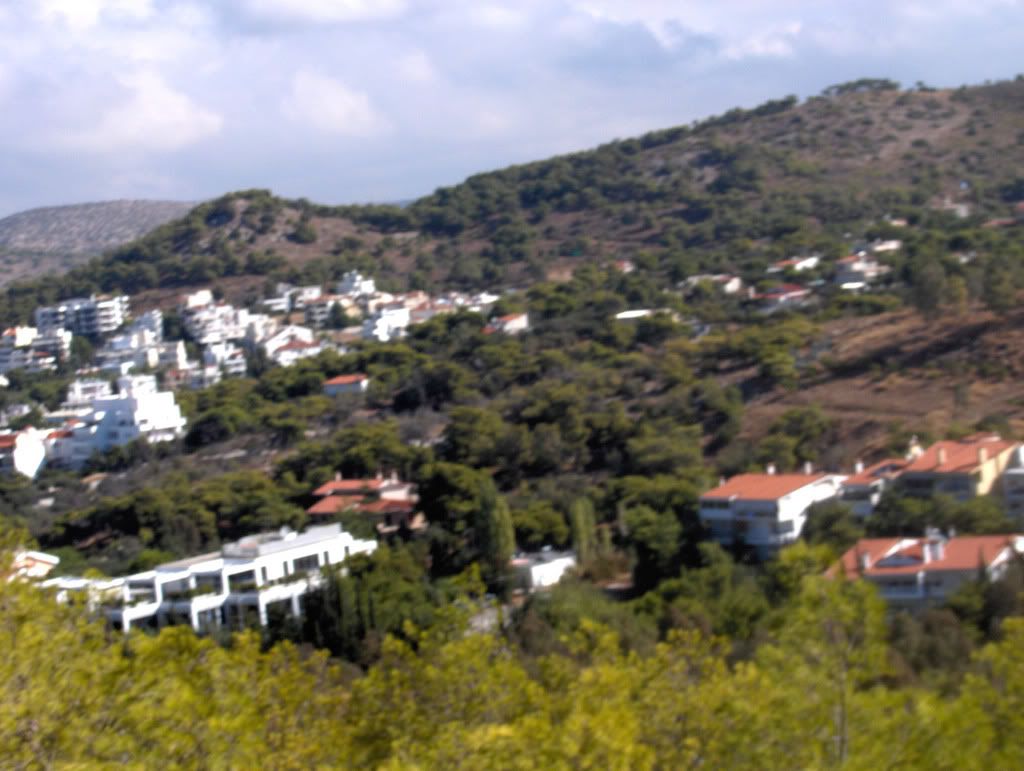
Cavouri (crab) is a beautiful coastland on the Saronic Gulf, a few minutes’ walk from Urania’s apartment and, being only twenty-two kilometers away from central Athens, a very popular hiking area for many Athenians. It is surrounded by hills abounding with pines and is famous not only for its extended sandy beaches, but also for its many steep rocks under which a variety of edible sea crabs (cavouria) make their abode. Urania had sat on those rocks many a time, reading, praying, meditating, or simply enjoying the splendid view of the sea, sometimes calm as a pool, sometimes extremely rough, the breaking waves’ sea spray reaching up to her face. Oh, she adored the sight and the sound of a swelling sea! One of her unfulfilled dreams had been to live in a house next to the sea and fall asleep under the lullaby of the waves...

From her favorite rock, she had often followed the ships en route from Piraeus to the Aegean islands and, when the horizon was clear, she could also behold Salamina and Aegina, the nearest islands to Attiki. Watching the sunset from that spot had always been a refreshing, uplifting experience for her. Time and again, she could hardly assimilate the beauty and the variety of colors in the sky, as the clouds drew a myriad of masterly designs, moving playfully around the sun. On that particular day, however, Urania needed to force herself to get out and take her usual walk down there. To be frank, she was not overly happy to be on her own amidst crowds of strangers enjoying themselves in the company of their families and friends. This made her feel lonely. It was different to walk along the seashore when hardly anyone else was about; she was used to that, as she had been a solitary traveler for the best part of her adult life. She set off, nevertheless, determined to cheer herself up, to uplift her spirit, and let the ‘kite’ of her soul fly higher.

Fortunately, the joyful faces and the penetrating voices of little children watching their kites reaching up had a warming effect on her heart. She approached some of them and spoke a word or two despite their parents’ suspicious and somewhat unfriendly looks. “What a funny world we live in!” she thought. “People are pleased when strangers speak to their dogs and play with them. Yet they get nervous if a passer-by smiles and greets their children.” Oh, never mind… Having walked for about a mile or so, she decided to turn back and look for a vacant rock, somewhere quietly, so that she could sit and talk to herself. She had strongly felt the need of communicating with her ‘Higher Self’, in an attempt of re-examining her lofty goals and aspirations.

Soon she found the right place, an angular rock projecting into the sea, and she sat there for the next hour or so. As Urania looked at the blue waters of the Saronic Bay, what a spectacle! A picturesque, flat, stony islet on her right was carpet-covered with snow-white seagulls! How beautiful! She had never seen such a spectacular scene before. “Unlike humans, birds must get on with each other quite well,” she thought. “How happy and carefree they seemed! They are probably the most privileged creatures. They can fly anywhere as they wish, watching everything from on high!” Urania had often dreamt of flying around over mountains and valleys, experiencing, in her sleep, the invigorating feeling of freedom. Talking about birds, she also enjoyed bird watching, especially when they flew near the ground, right above her head. On such occasions she usually stood still, wishing that some of them would come and sit on her shoulder. But it hadn’t happened thus far…

Leaving the seagulls on the islet bathing in the sun, Urania’s thoughts turned inwards. She began searching her heart, looking for reassurance, for inspiration, for strength, for enthusiasm, for some answers. Where had she started from and where was she going? Was she, peradventure, acting and moving within God’s will, i.e. according to her ‘destiny’? She was still not satisfied with what she had accomplished in her life. Many of her goals and aspirations were far from being fulfilled… She still had ambitions, noble and altruistic ones, which she should pursue so that her life would have meaning and purpose. Those ambitions constituted what she believed to be her “mission” to society. In a flash of a moment, her mind flew back to 1983, the day when she had handed in her resignation to the department manager at McDermott’s, in England. Her Jewish manager had asked her why she was resigning from such a good job. Urania’s answer, “Because God is calling me to something else”, had shocked him. “Which God? There is no God!” the manager said, and he continued, “Are you sure, Urania, you have not being brainwashed by a religious sect?” “Definitely Not!” Urania had answered, trying to push away any doubts that her manager’s ironic remarks could instill if her mind.

Indeed, in all her honesty, Urania believed that she had a special “calling” as a writer and a spiritual mission to fulfill, in spite of her shortcomings and humble origins. Whether that “mission” was assigned to her by her inner or Higher Self, or was entrusted to her by some Being or beings outside her, was difficult for her to answer. However, as far as she was concerned, it didn’t make any difference. Since she had accepted the “calling,” she ought to finish the work given to her as best as she could. And this was exactly what grieved her: the realization that her “mission” hadn’t gone as far as she would have liked to, i.e. she hadn’t seen any fruit of her labor yet. In other words, she hadn’t witnessed a bountiful harvest of the seeds she had sown over the years through several published books and articles she had written. As a human being, she did feel the need of some appreciation, if only as a reassurance that she was heading to the right direction.

As Urania was thinking of her stormy past and the quiet present, as she was contemplating the hardships she had gone through, trying to explain the ‘whys’ of her foolish mistakes and wrong choices and, yes, as she was, once again, trying to forgive herself and forget what had deeply hurt her and others, she felt tears running on her cheeks. Unconsciously, her hand reached down and tenderly touched the flower of a tiny plant stemming out of a hollow of the rock! “I love you little flower!” she whispered to it, her voice seemingly coming directly from her spirit. “Even though nobody takes any notice of you, even though nobody bends down to smell your fragrance, and no one cares to know your name nor bothers about your needs, I love you. I do love you, tiny plant, because of your determination to live your short life as best as you can, fulfilling your ‘mission’ under the most adverse circumstances. You are surviving without the company of any other plants. You have, my little friend, hardly any soil to hide your roots, neither some water to moisten them, but, in spite of all this, you have offered up a beautiful yellow flower and are now preparing to leave some seeds behind you! Oh, how grateful I am for the lesson you have taught me today! You may never see the sprout of your seeds, as there isn’t any fertile soil near you, but you trust the wind to take them elsewhere. Others will behold the flowers from your seeds...”

It wasn’t the first time Urania was engaging in a ‘conversation’ with a plant. She was used to whispering tenderly to wild flowers and blades of grass. And she was fond of petting the leaves of small bushes as she walked by. But this time, her interaction with the tiny plant had a special, penetrating effect on her heart. It was as if God had used it in order to speak to her, imparting two very profound messages. The first was that she shouldn’t be unduly concerned with the results of her labor. In time, the seeds she sowed through her books and articles would sprout and bring forth fruit after their kind. The second message was ‘determination’. No matter how disappointed she had been, or how misunderstood, rejected and hurt by others, she shouldn’t give up. On the contrary, she should summon up all her strength, exercise her spiritual muscles, and, once again, stretch out the wings of her soul and continue to sow seeds of truth, principles, values, love and rationality through her writings and otherwise.

When Urania returned home, the word “determination” still being prevalent in her mind, she was overwhelmed with joy and courage. Indeed, there was no way she could now turn the clock back and launch into a different life-style. It was too late for that. The situation was irreversible. “The river can never turn back”, she thought. To not do what she was doing would mean a dull life and spiritual death for her. Never mind that the journey she had been traveling was lonesome, it had granted her the most exhilarating experiences, and she would not change it for anything! Oh, how grateful was Urania to God for having entrusted her with that little mission! From now on, she promised herself not to look for results of her labor again. Unwavering, she should just keep going, keep sowing…
Copyright © 2007 by Maria Seferou

Wednesday, November 7, 2007

Lisa’s Baffling Love Affairs
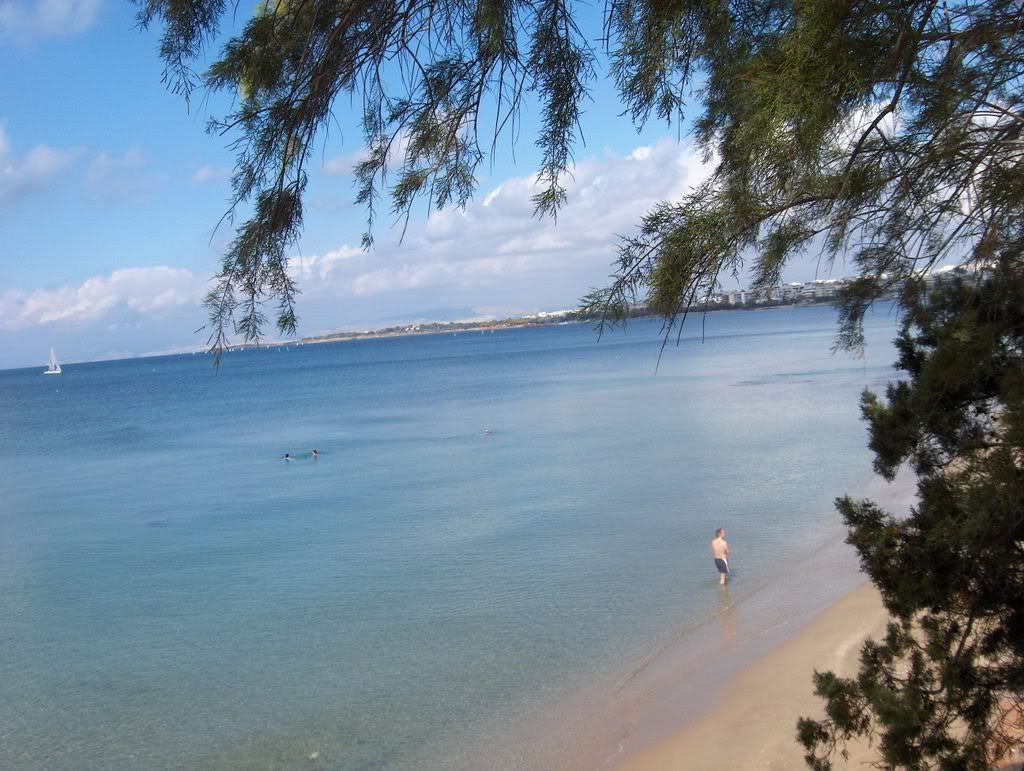
It was during her two-month unpaid leave back in 2004 that 22-year-old Lisa had bought a small two-bedroom flat under construction, as a holiday home, in a coastal suburb of Malaga, Spain. In June 2005 her flat was ready and Lisa looked forward to spending August in Spain, but not alone. At that time she was madly in love with John, a guy who was employed by the same advertising company as her. John was entitled only to a fortnight’s leave, and so he would return to London two weeks before Lisa. They flew to Malaga on the 1st of August 2005, and had a fantastic time together. John never stopped thanking Lisa, often saying, “What more can a guy expect from a bird?”

Upon her return to London, a fortnight after John had left Malaga, Lisa was in for a great shock. On the following Saturday they were both invited by Dr. Hughes, the managing director of the small company they were working for, to a garden party at his beautiful villa in Wimbledon to celebrate his 50th birthday. John had found an excuse to go there separately, and Lisa saw nothing wrong with that. She arrived there first, and was warmly greeted by her boss, who wanted to know all about her holidays in Spain. Since Dr. Hughes already knew about Lisa’s love affair, she mentioned to him that John had joined her in Spain, and that he would arrive at the party later.

While they were still chatting with each other, John turned up at the garden door, but not alone! To Lisa’s embarrassment and bewilderment, he was escorting a young blond lady, and they seemed to be very close to each other. John avoided greeting Dr. Hughes and settled in a corner with his new (or old?) girlfriend. Lisa went pale and shaky. Mrs. Hughes noticed this and sat by her trying to comfort the betrayed young lady. On his part, Dr. Hughes limited himself to some angry looks toward John. Being the host, he wouldn’t risk doing more than that. Lisa tried to compose herself and not explode in a scene of jealousy that would spoil the party and harm her image. In retrospect, she wondered how she had managed to restrain her anger and not become as mad as a bull in a china shop.

On Monday at work, John and Lisa were like two strangers. Dr. Hughes called Lisa into his office and talked with her: “I know how humiliated and hurt you felt on Saturday night. I must congratulate you for your decent behavior, Lisa. You are a remarkable young lady. Please tell me, is there anything I can do to make you feel better? Would you, perhaps, like me to have a word with John on your behalf?” “Oh, no! Thank you so much for your kind offer, Dr. Hughes. I appreciate your concern, but I have nothing to say to John,” said Lisa, and she added, “That chapter of my life is definitely closed.”

Dr. Hughes went on asking her politely: “Do you believe you can still be happy and effective in my company, knowing that from time to time you will have to sit at the same table, working side by side with John?” “Coming to think of it, my answer is ‘no’! So, I guess, I must leave your company, Dr. Hughes”, said Lisa, while wiping a tear that was running down her cheek. “You know how I appreciate your excellent work here,” said Dr. Hughes, “but under the circumstances, either you or John must go.” “I understand,” said Lisa. “I suppose it’s me and not John that must go…” Dr. Hughes made no comments on her subtly bitter remark, and offered to help her in finding another job; but Lisa thanked him all the same. She was paying a dear price for learning a hard lesson: never to form a relationship with someone working under the same roof.

Lisa made every effort to forget John and start a new life, but, alas, the worse for her was still to come. A few days later she sensed some unusual changes in her body, and so she went to see a physician. When she completed all the tests, she was told that she was pregnant! “Oh, my God!” exclaimed a frightened Lisa. “What am I doing now?” To share the good-bad news with her parents was out of the question. They lived in Edinburgh and being very puritanical they would be upset and worried. So she decided to talk with her friend Mary, the only person she could trust. Mary advised her to go for an abortion. “I have done it twice so far, and it is not such a difficult thing to do. Don’t worry, I will come to the doctor with you,” said Mary. Lisa agreed without second thoughts. Moral principles didn’t concern her at that time. Nor was she aware that abortions always carried certain risks. When the gynecologist had finished his ugly job, he advised Lisa, “You must be careful with your relationships. Abortions can leave you barren.” These words kept ringing in Lisa’s ears. She longed to be a mother, albeit within a happy marriage. She only hoped that this first abortion had not damaged her uterus, and she promised to herself never to have another unwanted pregnancy.

During the following weeks Lisa experienced an emotional crisis. She felt guilty and depressed. She was now beginning to realize that by having an abortion she denied a helpless human embryo the right to be born, the right to life. But it was too late for tears. She blamed John, she blamed her friend Mary, and she also blamed the doctor who did not advise her against the abortion. But primarily, Lisa blamed herself. She had learned to always take full responsibility for her actions. She ought to know better; she shouldn’t have been panicked. And, yes, Lisa dared to think she ought to have prayed about it, although she had stopped praying about anything for the previous five years. With a broken heart and heavy spirit, she now occupied herself with searching for another job. When she eventually found one, she threw herself diligently into working so as to have no time or energy left to think of anything else. She worked overtime everyday ‘till the cows came home’, as the saying goes.

However, after a while Lisa found this way of life monotonous. She was lonely, and she felt the need to fall in love again. So she made an effort to start going out and, sure enough, the ‘devil’ was around the corner. Her new prince was charming Malcolm, a 30-year-old psychologist, whom she met in the local pub. As soon as their eyes met, Lisa felt that warm tingling in her heart, and she knew there and then that this man wouldn’t be a stranger for too long. Her feeling was verified shortly afterwards, when Malcolm approached her and asked if he could offer her a drink. “By all means, thanks,” said Lisa with a meaningful smile. Malcolm returned with the drink, and without wasting any time he started courting Lisa openly. His voice was sexy and his manners gentle, and it didn’t take long for Lisa to feel Eros’ fiery arrows piercing her heart. They met three more times before Malcolm asked Lisa to have a full sexual relationship with him. The guy confessed to Lisa that he was very fond of her and that he couldn’t wait to make her his own.

“Oh, you seem to be in a hurry,” said Lisa, and she added, “We hardly know each other. However, let me tell you right from the beginning that I am only interested in an asexual relationship, i.e. a platonic friendship. You see, I have been let down by a man and I ought to protect myself. In fact, I have even promised myself that I would not sleep with a boyfriend before marriage. Now you know where you are standing. Take it or leave it.” “Marriage? Talking about marriage to someone you have met only a few days ago?” asked Malcolm. “Oh, no! I didn’t mean marriage necessarily with you. I meant marriage with the man whom I will consider worthy of being my husband, whoever he might be.” “Please don’t think that all men are the same. I am different. I have a great respect for ladies. And I promise never to hurt you.” “Yeah! It sounds familiar,” said Lisa. “Nothing new under the sun… Anyway, I will stick to my decision. Are you interested in a platonic relationship with me, then?” “Well, since you put it that way, I have no other choice. I don’t want to lose you now that I have found you, sweat heart! I will be patient and wait until you become mine – heart and body!” said Malcolm. “That might take a long time,” Lisa answered. “I don’t mind, gorgeous! Would you like to have another drink?” “A soft drink, please. Perhaps an orange juice, if this place has fresh oranges.” “I am sure they have. I know it, as I have been here before.” “Alone?” asked Lisa. “You shouldn’t care if I come here alone or not, since we are just friends. Aren’t we?” “Of course I don’t care. I was just asking out of curiosity,” said Lisa, trying to convince herself to stick by her decision.

As it turned out to be, the following outings with Malcolm were hilarious. Lisa, in an effort to guard herself against being pregnant again, at times behaved rather cynically. And Malcolm grew more and more frustrated. Nearly every time he went to Lisa’s home to take her out, he was conspicuously aroused to the point of being embarrassed. However, Lisa had no mercy on him. “I worry about you, dear,” she said to him one day. “Can’t you control your sexual drive? Most probably you have been watching a lot of pornographic stuff… I bet! Suppose that we were in a public place; what would people think of you?” “They will assume that I am a frustrated man because my girlfriend doesn’t love me enough, ” said Malcolm. “Come on, dear! Don’t put it that way. This has nothing to do with my love for you. It only has to do with my justifiable decision not to have sex before marriage. I have explained all this to you before. Can’t you see my point? But I suppose there is a way out for you…”

“Let me hear your suggestion, Lisa. What is it?” “How can I put it? I am embarrassed to talk like this, but I cannot see another way for you to relieve yourself. I am sure you know about onanism.” Malcolm felt humiliated. He became angry and left Lisa’s place on the spot, banging the front door behind him. To her surprise, however, the next day he was back there to apologize! “Lisa, excuse me about yesterday. I shouldn’t have been so upset with your suggestion. I had second thoughts about this, and it seems to be a ‘solution’ until you are ready to sleep with me, princess!” “You mean until we are married,” said Lisa, and she added, “This way is safer, as there would be no unwanted pregnancies, and no danger of AIDS! To be honest, Malcolm, as most men jump from one mistress to another, I cannot be sure who you slept with yesterday, or even a week or a month ago. From bitter experience I know that condoms are not always reliable. So I need to be on the safe side, you see.”

“I agree with you on that, dear,” Malcolm replied. “How about having anal sex from time to time? This will exclude at least the danger of pregnancy.” “Having ‘anal’ what? Say that again, if you dare!” “I am sorry dear, I didn’t mean to offend you. There is also the alternative of oral sex. I assume as adults we can talk about these things openly,” said Malcolm. “No! I am afraid I cannot consider any kind of sexual perversion whatsoever”, Lisa answered angrily. “You knocked at the wrong door. The anus is a canal through which solid waste is eliminated from the body. Nothing more, nothing less! To use it as another hole for sexual penetration is perversion. It is unnatural, and as such is detrimental to one’s health. Regarding oral sex let me remind you that our mouth is assigned for higher functions. No dear, there is only one natural ‘hole’ for sexual penetration, and before you enter my holy ‘hole’, you must become whole in character,” said Lisa while playing on words. “By the way, have you ever heard of the biblical story of Onan, whereby it is implied that the spilling of sperm, if it’s not intended for reproduction, is sheer masturbation, which is considered a sin? I just thought to let you know.” “Wow!” said Malcolm. “What am I supposed to do then? Is there any way out for me?” “Marriage is the answer”, said Lisa.

Strange enough, in spite of the occasional quarrels over sex, Lisa’s platonic relationship with Malcolm went on without major problems for about five months. Malcolm was living in Bristol during the weekends, in his parents’ house. During the week he stayed in a rented bed-sitter in Harrow, Middsex. He used to write passionate love letters to Lisa and occasionally romantic poems, and gradually but steadily Lisa was falling in love with the fellow. Occasionally she even felt guilty for not having sex with him. But she ought to stick by the promise she had given to herself.

One Saturday in April 2006, Lisa had an unexpected visitor. It was about ten o’ clock in the morning when the door bell rang, and Lisa’s landlord, who was living in the ground floor flat, told her that she had a visitor. Lisa looked down from the top of the stairs and saw a young woman with a fancy hat holding an envelope in her hand. “She must be from Salvation Army asking for money,” Lisa reckoned. But before she had a chance to say ‘hello’, the young woman was fast climbing the stairs. When at the top, she handed the letter to Lisa, who recognized her own handwriting on the envelope. “What is this?” Lisa asked. “It’s your love-letter to my fiancé, Malcolm,” the woman answered. “Are you telling me that Malcolm is your fiancé?” “He certainly is! We have been living together in a house we jointly bought in Bristol for the last seven years, and we are planning to marry soon.” “Is that right? But your lying fiancé had told me that he lives in Bristol with his parents. Thanks for opening my eyes to the truth, anyway.” A few moments of silence followed, before Lisa opened her mouth again. “Well, if this is the case, you can keep your fiancé. I don’t want to have any association with a liar. Tell him not to bother me again,” said Lisa with calmness that amazed even herself.

As the strange young lady was walking downstairs, Lisa felt nauseated and empty. She had no emotions to be manifested. She could feel neither anger, nor sorrow; neither bitterness nor relief; just emptiness and a long silence in her mind. She walked around in her lounge for a while, as if she were hypnotized, doing nothing. Later she managed to compose herself and go to the supermarket for her weekly shopping.

On Monday morning Malcolm came round to speak to Lisa. “Let me explain to you, my love, how the situation is. I know you had a strange visitor last Saturday, but I must talk to you.” “You have a cheek! Get out of my sight, right now,” said Lisa in an indignant manner. “I don’t want to hear a word from you. You are a liar, a cheat and a womanizer. I am so glad I did not have sex with you. That’s about the only thing I got right since I met you.”

It was the first time that Lisa had become so enraged. But she had reached her limits… It would take her a long time to overcome the distrust towards men and start contemplating about another platonic relationship. Gradually but steadily she turned to God for consolation and guidance, and hesitantly she joined the local Evangelical Church. She thought, “If I stand a chance to meet a man of high moral principles, it will be there, in the Church. Where else?”

Oh, no! Lisa did not want to become a religious fanatic. She believed in God but did not accept certain far-fetched and hostile to logic Christian doctrines and myths. So, she kept an open mind, and whenever she read the Bible she did it always with a critical disposition and without preconceived ideas, trying to separate the ‘meat’ from the ‘bones’ therein. From now on, all she hoped and prayed for was to find a man of a kindred spirit to make a blessed family. Unfortunately, this too, proved quite difficult… But Lisa was not prepared to make any compromises, nor could she become a hypocrite and hide what she believed. It would take three more years before Lisa attracted the man of her dreams. But it was worth waiting patiently for him!

Copyright © 2007 by Maria Seferou